
case study • waxell CONNECT

How Spacebar Studios Discovered What Their AI Was Doing With Client Data — and Governed It in 3 Hours
A boutique GTM agency with no engineers and no formal AI governance ran Cowork on every client account. Three hours after deploying Waxell Connect — zero code changes — they had their first full audit trail, their first PII flag, and the answer to a question they hadn't known to ask.
3 hrs
Zero to full Cowork governance — zero code changes
0 → 100%
Client data audit coverage across all sessions
3
Critical governance events surfaced in first week
<20 min
To answer any enterprise AI governance question
We didn't know what the AI was touching on client data.
That's not an answer you can give an enterprise client. Three hours after setting up Connect, we knew — and what we found was a wake-up call we're glad we got before a client did.
David Campbell
Founder, Spacebar Studios
Executive Summary
Business problem:
Spacebar Studios was using Claude Cowork on every client account with no visibility into what the AI was accessing. Subscriber lists, confidential research briefs, and strategic client documents were flowing through Cowork sessions with no policy enforcement, no audit trail, and no boundaries between client accounts.
Business outcome:
Three hours after deploying Waxell Connect — with zero code changes and no engineering resources — every Cowork session was governed. Connect immediately surfaced three critical events: a PII flag on a subscriber export, an old client archive being accessed by active sessions, and a confirmed account bleed where one client's proprietary research had been used in a competing client's newsletter content.
Strategic implication:
Spacebar can now answer any enterprise client's AI governance question with a complete, timestamped audit log in under 20 minutes — turning a gap that was a deal risk into a credibility asset for landing and retaining enterprise accounts.
Customer Snapshot
Company
Spacebar Studios · spacebarstudios.co
What they do
GTM acceleration for Enterprise B2B SaaS & Services — newsletter programs, owned media, demand generation
Client Verticals
ServiceNow, MS Dynamics, SAP partner ecosystems
Team
Small engineering team building a production AI-powered B2B sales outreach platform
Industry
B2B SaaS — AI-driven sales outreach and personalization
Active AI Agent
Claude Cowork — used across all client accounts for research, drafting, and content production
MCP environment
Claude Cowork desktop — 3–4 team members, 10–20 sessions per week
Governance context
No formal compliance program, but enterprise B2B clients with data handling expectations
The Situation Before
Spacebar Studios runs newsletter programs for enterprise B2B SaaS companies — clients who expect their agency to handle sensitive data with the same rigor they apply internally. Strategy documents. Competitive positioning. Subscriber lists. Campaign intelligence. All of it passes through an engagement with Spacebar.
By early 2026, Claude Cowork had become central to how the team worked. Research sessions. First drafts. Content organization. Deliverable filing. Three to four team members were running 10 to 20 Cowork sessions per week across a full roster of active accounts. The speed was real. The quality was real.
What wasn't real: any formal understanding of what Cowork was accessing to produce that output.
"We were using Cowork on every account and it was doing incredible work," says founder David Campbell. "But the honest answer to 'what is your AI touching on our data' was: we didn't know. There was no log. No policy. No documentation. We were moving fast and trusting the tool — which is the right instinct — but we had no visibility into the specifics."
The triggering moment wasn't a breach or an incident. It was a question.
During an onboarding conversation with a new enterprise prospect — a company in the ServiceNow ecosystem with its own IT and data governance function — the prospect asked how Spacebar handled AI governance on client account data. It was a reasonable question. Increasingly, it's a standard one.
Spacebar couldn't answer it. Not with a bad answer — with no answer. No policy document. No audit trail. No framework for what their AI was allowed to touch, where it could write, or what happened to the data it processed. The gap was real, and now it was visible.
Why Waxell Observe
Spacebar doesn't have engineers. There's no technical infrastructure team, no platform lead, no one to build an internal governance layer. The options were: accept the gap and hope no enterprise client pushed harder, or find something that could govern Cowork without requiring a software project.
Connect's value proposition was immediately legible: MCP-native governance over any agent that uses the Model Context Protocol — which Cowork does — with zero code changes required. No modification to Cowork itself. No new workflows. No engineering sprint. The team keeps working the way they always have.
"We're not a software company. We're a content and strategy shop," says Campbell. "The moment we saw that Connect required no code changes and could be up in hours, not weeks, it was an easy decision. We needed governance we could actually do."
The Deployment
Start to finish: approximately three hours.
A Connect workspace was created and linked to the team's Cowork environment. No changes to Cowork itself. No changes to how any team member worked. No downtime. The team kept running sessions while governance came online in the background.
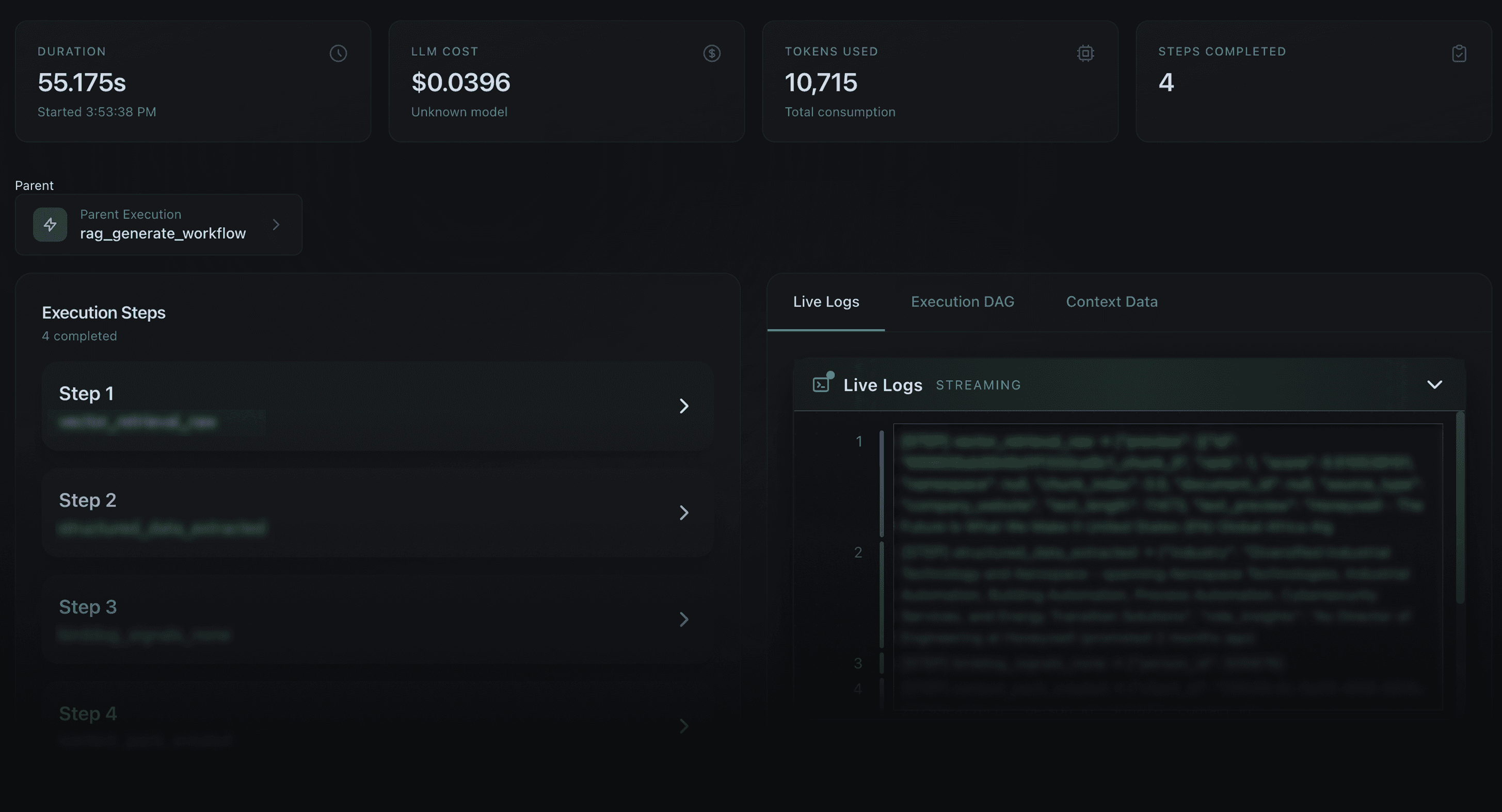
By the end of the first business day, every active Cowork session across the team was visible in a single Connect workspace — which agents were running, who was running them, what MCP tool calls they were making, and what files they were accessing. For the first time, leadership had a real answer to: what is our AI actually doing on client work?
The answer, it turned out, included some things they hadn't known to look for.
What Connect Found in the First Week
Event 01
The Subscriber Export
A newsletter subscriber list — names, email addresses, company names — had been exported from Spacebar's email platform weeks earlier for reference and left in a shared workspace folder. A Cowork session working on a separate, unrelated task read it as context.
Connect flagged it immediately: PII detected in Cowork session context. The file hadn't been in scope for that session intentionally. The team member running the session didn't know Cowork had reached it.
"I had no idea that file was even in the folder the session was working in. Connect caught something I never would have thought to check for."
Event 02
The Former Client Archive
Spacebar had offboarded a client several months earlier. The files — campaign archives, subscriber exports, strategic briefs — had never been formally moved out of the top-level workspace directory. They were still sitting alongside active client folders when Connect came online.
Connect surfaced it: Cowork sessions were accessing files from the former engagement as context during active client work. The former client's content was influencing current output without anyone's knowledge.
The files have since been archived and removed from active workspace access. A process for client offboarding file management is now in place — something that didn't exist before Connect made the gap visible.
Event 03
The Account Bleed
This was the most significant finding — and the clearest demonstration of why governance over AI file access matters for any agency working across multiple clients in the same vertical.
Spacebar had two active client accounts that are both ServiceNow ecosystem partners. Both companies operate in field service management. Both had folders in the same workspace directory, accessible to the same Cowork sessions.
A team member ran a Cowork session to draft Client B's newsletter on AI in field service management. The output was strong. What Connect's logs revealed: Cowork had pulled context from Client A's proprietary research on the same topic — competitive positioning data, market sizing analysis, strategic framing that Client A had shared under the assumption that it stayed inside their engagement.
The output was better for it. That's the problem.
"The content Cowork produced for Client B was legitimately good," says Campbell. "But it was good partly because it had access to Client A's confidential work. That's not something we could ever have allowed knowingly. And before Connect, we had no way to know it was happening."
Governance Outcomes
Metric
Result
Cowork sessions visible to leadership
0 before Connect → 100% of active sessions across 3–4 team members
Active sessions governed per week
0 before Connect → 10–20 sessions, all logged
Time to establish full MCP governance
~3 hours. Zero code changes. Zero engineering resources.
File access audit trail
None before Connect → 100% of Cowork MCP tool calls logged with timestamp and file identity
PII incidents caught
1 in first week — subscriber export read in out-of-scope session
Former client data exposure
Caught and remediated — archive files removed; offboarding process created
Account bleed events
1 confirmed — Client A research used in Client B content. Now prevented by workspace file policies.
Time to answer AI governance question
Could not answer → complete client-specific audit log in under 20 minutes
The Observe Stack
Capability
What It Did
What It Produced
Agent Coordination Mesh
All active Cowork sessions across 3–4 team members registered and visible in a single governance workspace
First real-time answer to: what AI sessions are running on client work right now?
MCP Governance Layer + PII Scanning
All Cowork MCP tool calls governed by policy engine. PII scanning on file access across all client account folders.
Subscriber export PII flag caught in first week. File-scope policies now active per client folder.
Rug Pull Detection
All MCP integrations Cowork connects to monitored for tool description changes
No rug pull events detected — detection active and ongoing
Human-in-the-Loop Inbox
High-stakes Cowork outputs — completed newsletter drafts staged for delivery — routed for review before client send
Review gate active. Lightweight quality check with no workflow disruption.
Full Audit Trail
Every Cowork MCP tool call logged: timestamp, files read, files written, integrations used
Complete client-specific log available in under 20 minutes for any enterprise governance review
What They'd Tell You
We were using Cowork on every account and it was doing incredible work.
But if you'd asked me what files the AI accessed on any given client session, I couldn't have told you. There was no log, no policy, no boundary between accounts. When a prospect asked us how we govern AI on their data, we realized we had a gap we couldn't defend. Connect fixed that in an afternoon.
DAVID CAMPBELL
founder
Setup took a couple of hours and nothing about how I use Cowork changed.
Setup took a couple of hours and nothing about how I use Cowork changed. Connect just runs underneath it. The first thing I noticed was seeing all my sessions in the dashboard — that was new. Then a PII flag came up on a subscriber export I'd dropped in a shared folder without thinking. That was the moment it clicked for me. The AI was already touching things we hadn't accounted for.
tbd
ACCOUNT MANAGER
What Came Next
Following Connect deployment, Spacebar Studios implemented per-client workspace folder policies — scoping each Cowork session's file access to only the relevant client directory. Former client archives have been moved to an offline store with a formal offboarding checklist for future engagements.
The governance posture is now part of the new business conversation. When enterprise prospects ask how Spacebar handles AI on client data, the answer is a documented policy, an active governance layer, and an audit trail they can review. The question that was a deal risk has become a differentiator.
Spacebar is also evaluating Waxell Observe as their content work begins to involve building lightweight custom automations — the natural next step from governing agents they use to governing agents they build.
